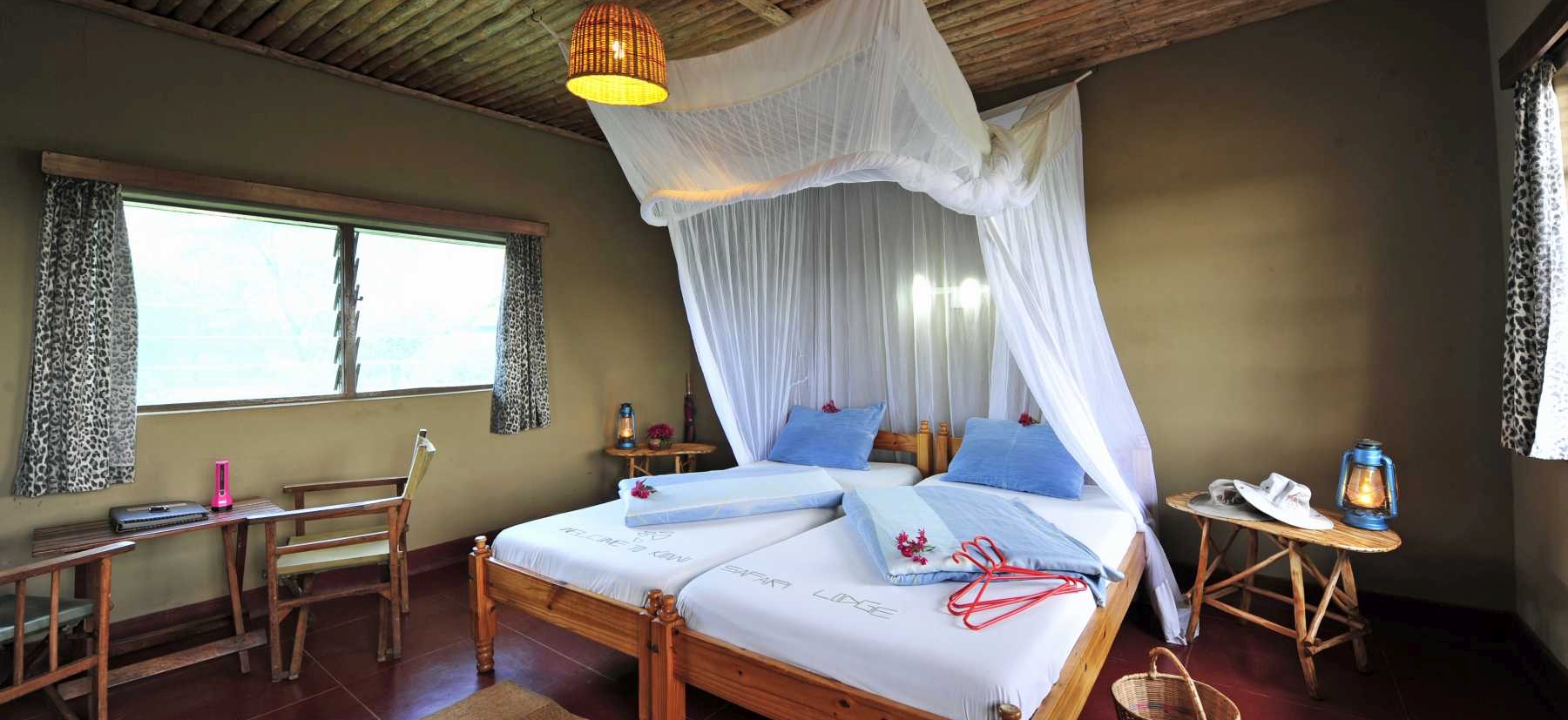
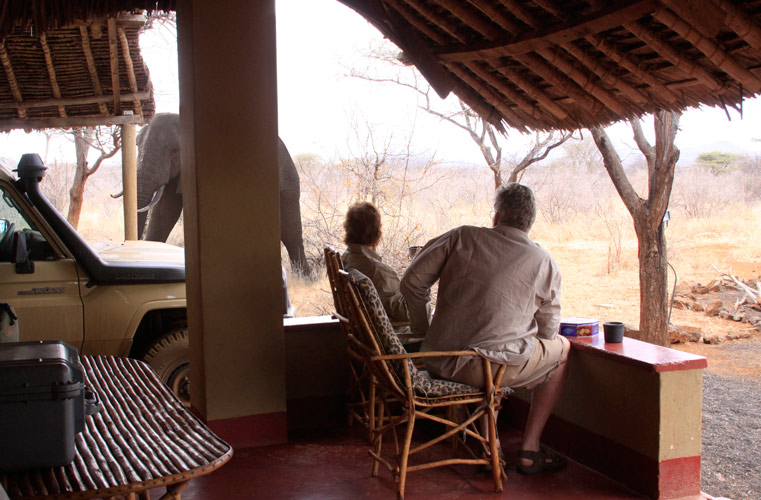
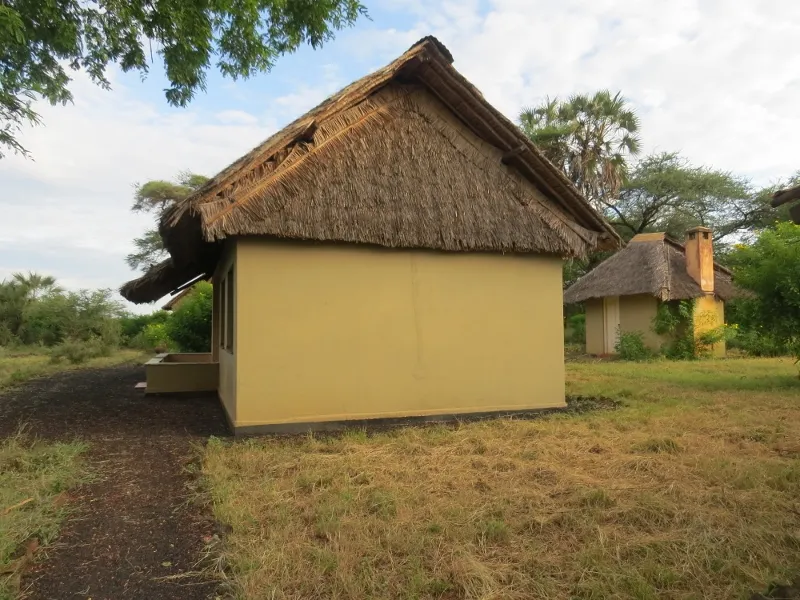
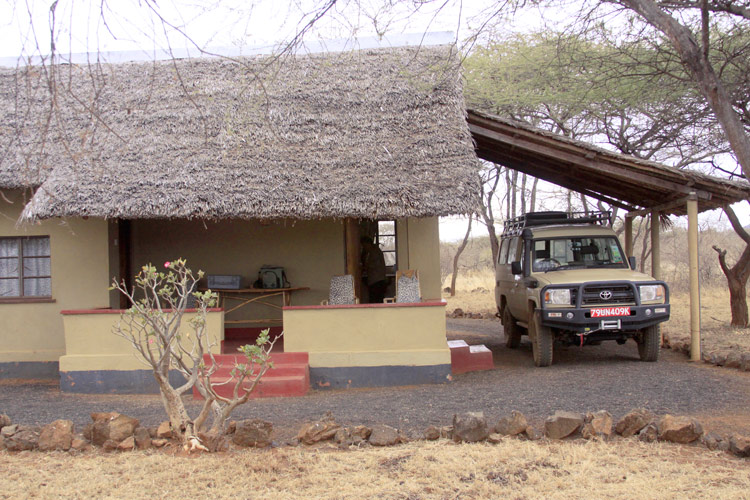
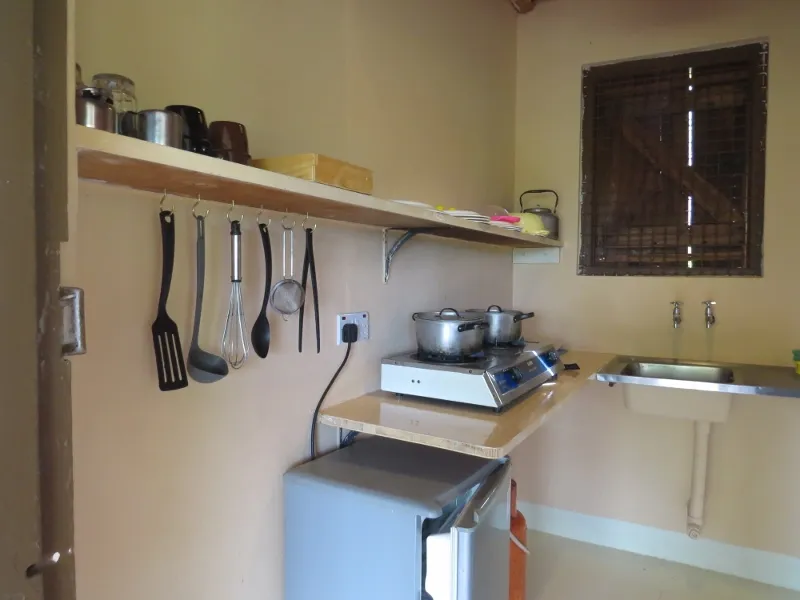
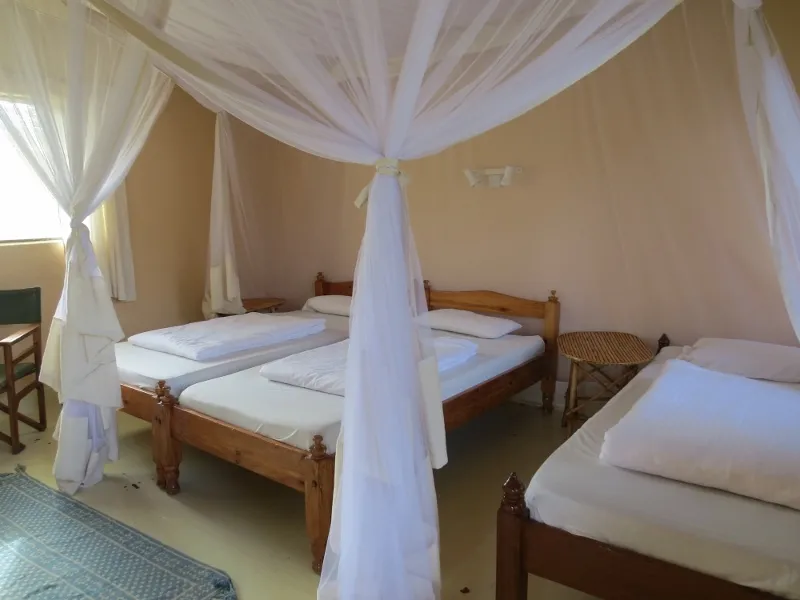
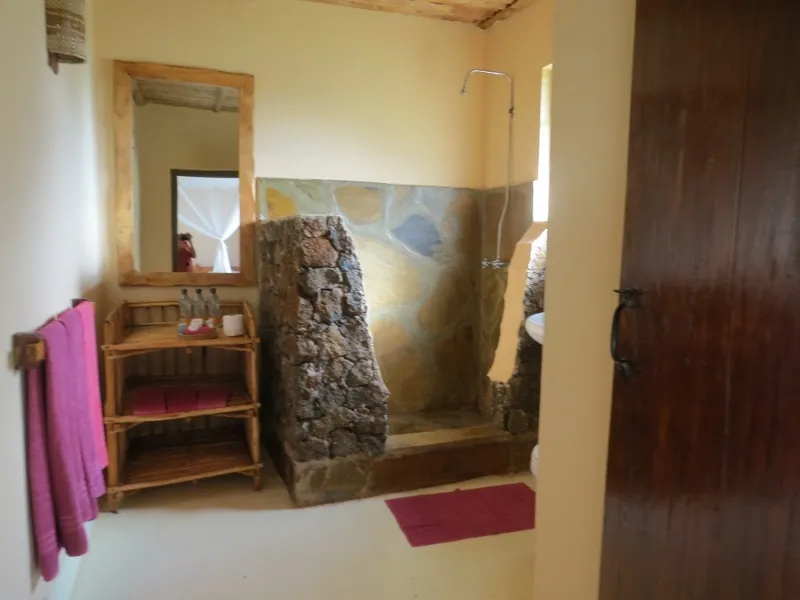
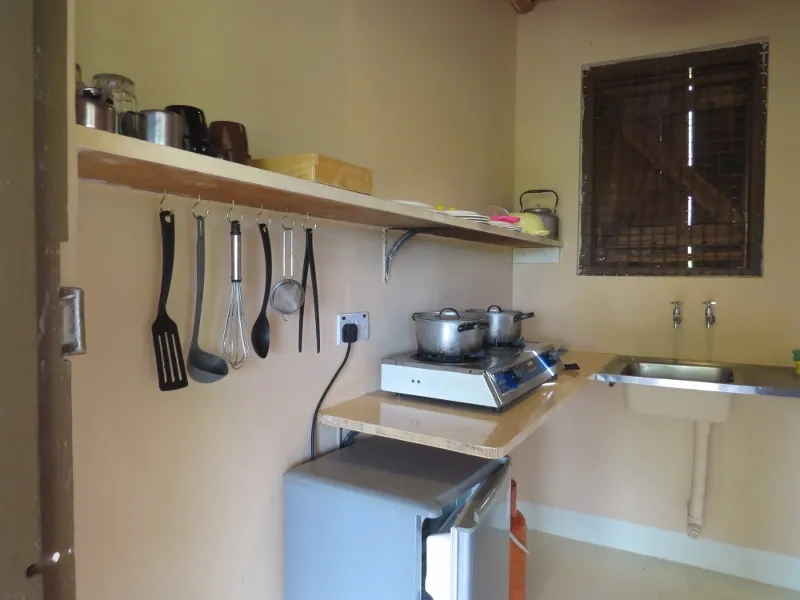
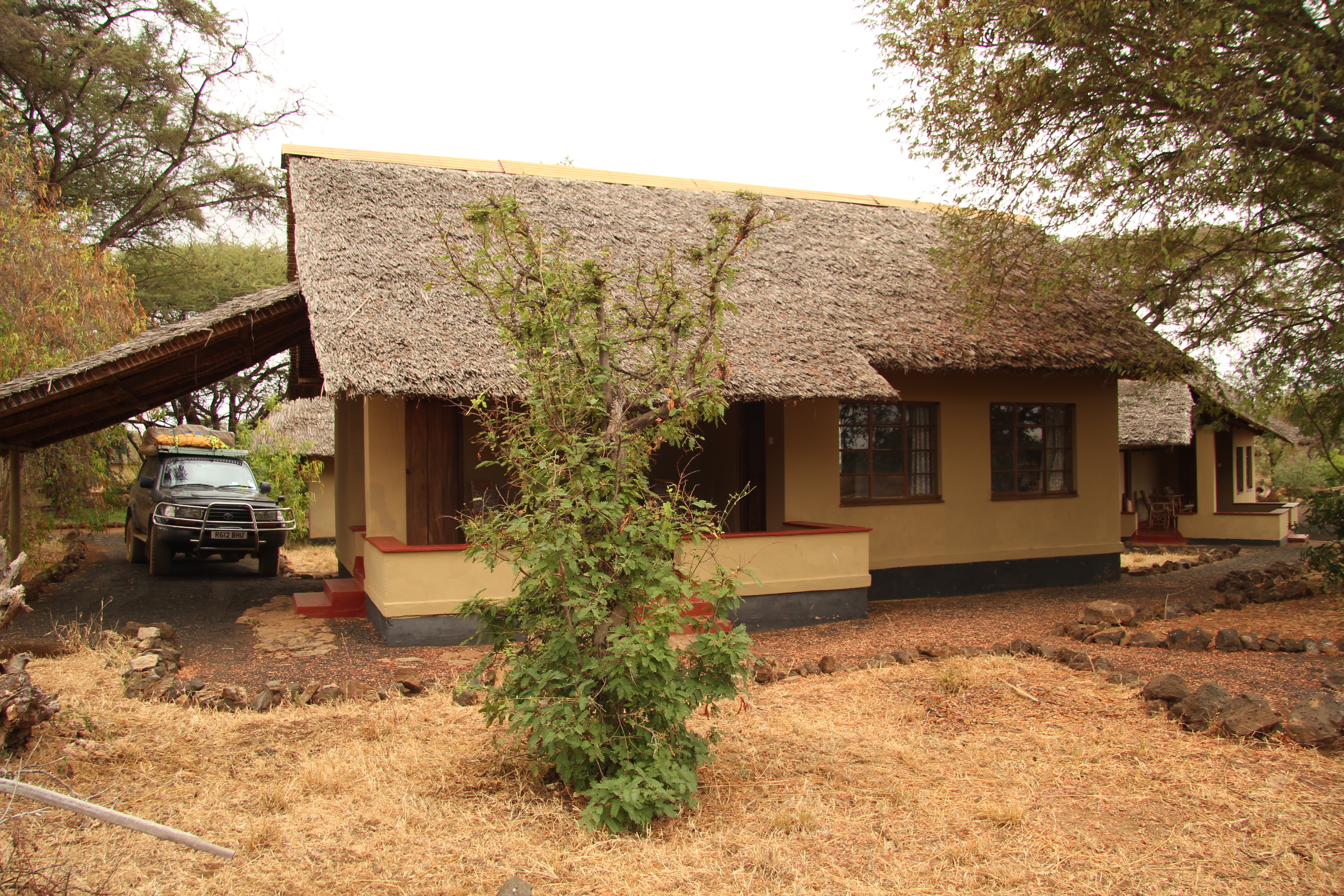
Kitani bandas are luxury self-catering Bandas located in Tsavo West National Park, Kenya approximately 250 kilometers from Mombasa and Nairobi. From Mtito Andei, it is a 50 km drive to Kitani banda, about 1 hour. Kitani ‘bandas are probably the oldest accommodation Tsavo West Park dating back to 1954 and constructed just six years after Tsavo park was gazetted. The 8 Kitani Bandas in Tsavo are equipped with a 4,5 sqm kitchenette with a fridge, plates, pots, cutlery, glasses and cups as well as with small cookers with gas and sinks. A table and chairs are at your disposal. Additionally, there is a 5,7 sqm bathroom with towels and running hot and cold water, toilet and shower. The sleeping rooms have a size of 25 sqm and can be equipped with up to 3 beds per cottage. These are provided with duvet covers and mosquito nets. From the roofed veranda you look directly to your private fireplace and can watch the animals passing by. The perfect base to discover the breathtaking landscape and animal kingdom on your own. Guests are allowed to use the free WIFI and the pool & gym at the nearby camp area. You will also find a private parking lot directly beside your banda as well as a room steward. The Kitani Lodge is situated about 1,5 km away from Severin Safari Camp. Amongst others you will find the reception, the Out of Africa Restaurant, the Thorn Tree Bar and the KENBALI SPA here, which all can be used – partly for a surcharge
Kitani Safari Lodge
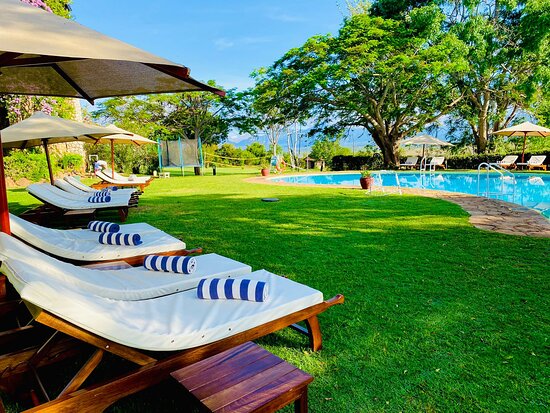
Kitani bandas Fact Sheet
Kitani Bandas is close to but separate from the Severin Safari Camp, the accommodation in each Bandas is spotlessly clean and each comprises a twin-bedded room with en-suite shower, a kitchen and large covered stoop, we have everything there for you, knives / forks, plates, pans, gas hob and a fridge, use of the main communal deep freeze is free of charge. All you need to take if you are self-catering is your food, booze and drinking water ohh and shampoo and washing up liquid plus nice sheets and towels are provided. You can also eat and drink at the Severin Safari Camp next door and make use of the swimming pool (free of charge) and the spa. There was plenty of game in the area at the time and the staff at the Kitani Bandas and the safari Camp were VERY helpful. There is a private parking space for every Banda. The Severin Safari Camp and Kitani Bandas are not fenced, wonderful situated in between Mzima Springs and Tsavo River which gives you an amazing and unforgettable stay with us. The Kitani Lodge offers bandas that are equipped with kitchenette which offers a table and chairs, plates, pots, cutlery, glasses and cups (4 per Banda) a little herd with gas and a washing basin. The own bathroom is equipped with towels, running cold and warm water, toilet and shower. There are up to four beds per Banda with bed linen and mosquito nets. A baby bed can be provided on prior request. From the covered patio guests have a direct view on their private campfire from where they can watch the animals passing by- an authentic Africa experience amidst the Kenyan wilderness and the perfect location to discover Kenya. A real adventure!
Tsavo National Park
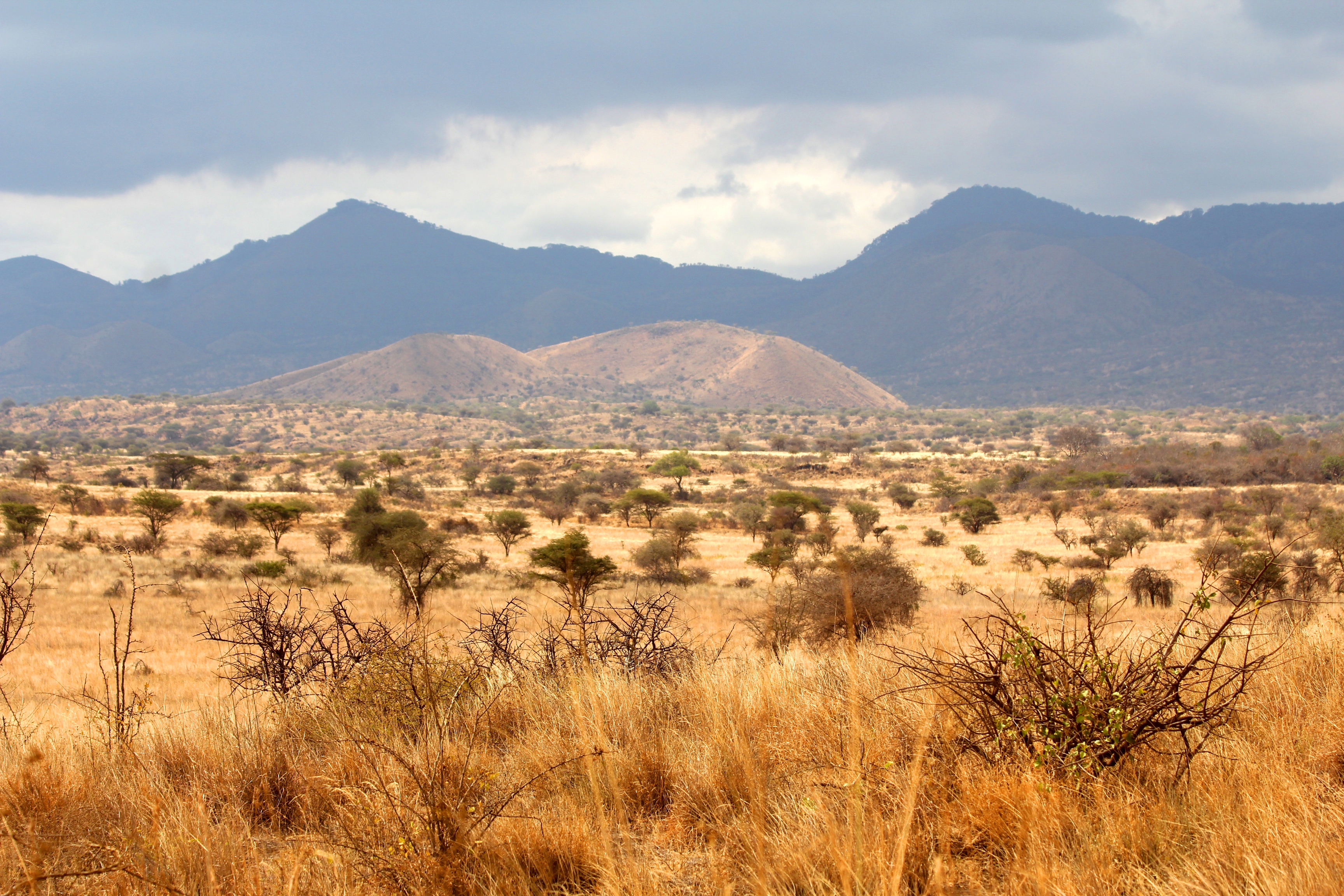
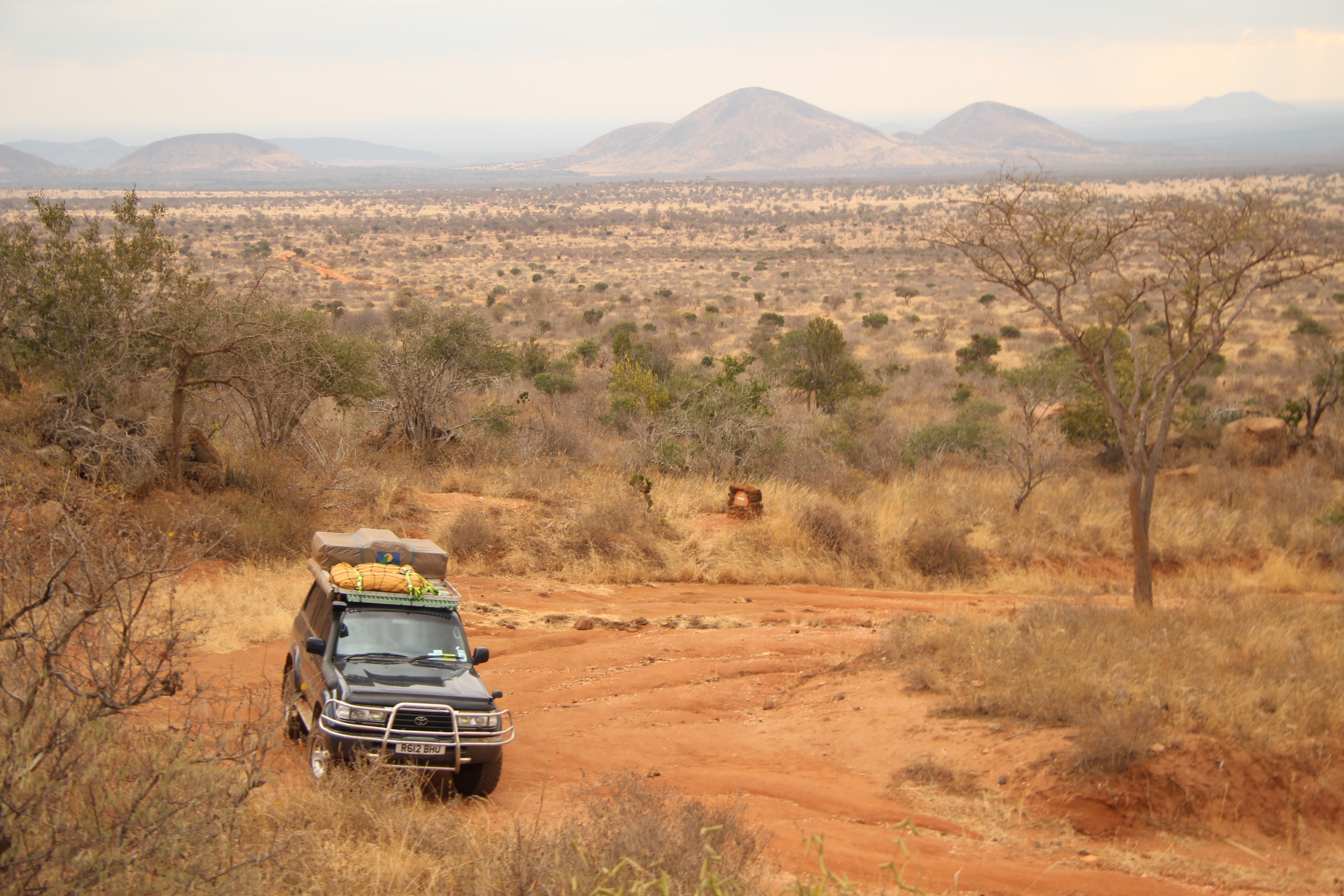
Situated in Kenya’s south-west, Tsavo park is an enormous wilderness area that has been divided into Tsavo East national park and Tsavo West National Parks. Combined, Tsavo is Kenya’s biggest park and, at 22,000 km² (13,671 miles), one of the world’s largest game sanctuaries. It is particularly well known for its large herds of elephants and captivating landscapes. Tsavo is one of the less populated game areas in Kenya and is perfect for those who want to enjoy a pristine wildlife experience. A highlight of Tsavo National Park is the spectacular Mzima Springs, where crystal-clear water flows through volcanic rock. Although Tsavo West and Tsavo East were once a single mega-park, they were separated decades ago, along a line coinciding with the Mombasa highway – and they feel like quite distinct national parks with different eco-systems: the open, flat-to-undulating plains and scattered bush of Tsavo East National Park and the much more wooded, hilly landscapes, dotted with volcanic cones and dramatic, black lava flows, that characterise Tsavo West National Park. Just as Tsavo East has its core area in the far south, so Tsavo West safaris invariably concentrate on a core part of the park, in the north, known as the Developed Area – a relatively small, 1,000km² area north of the Tsavo River, with magnificent landscapes and a good network of sand and gravel park roads. This district’s well-watered, volcanic soil supports a good range of woodland and savannah habitats for the full panoply of Kenyan wildlife – although in the hilly bush, the animals can be hard to see. To the south of Tsavo West, the Lumo Community Wildlife Sanctuary, directly bordering the well-known Taita Hills Game Sanctuary, is one of Kenya’s most successful new community conservation initiatives. If you’re interested in Lumo safaris you’ll find there’s just one lodge on the conservancy and that it shares a common border with the Taita Hills Sanctuary.
Tsavo West National Park Safaris
The majority of visitors to Tsavo West are on short road trips from the coast to the area’s lodges. A Tsavo West lodge safari would normally include two or three nights at one of the four main safari lodges in the Developed Area. Unlike Tsavo East safaris, however, you’re not restricted to road access (or flying in by quite expensive chartered light aircraft) as there are two main airstrips that are frequently used by the scheduled safari airlines, either as part of longer safari incorporating some of Kenya’s other parks, or as a stand-alone safari add-on, either from Nairobi or from the coast. Expert Africa uses two lodges in the region – an outstanding tented camp and cottage lodge in a wildlife-rich location close to Mzima Springs, and a spectacularly sited lodge in Lumo sanctuary to the south of the park.
Geography and wildlife of Tsavo West
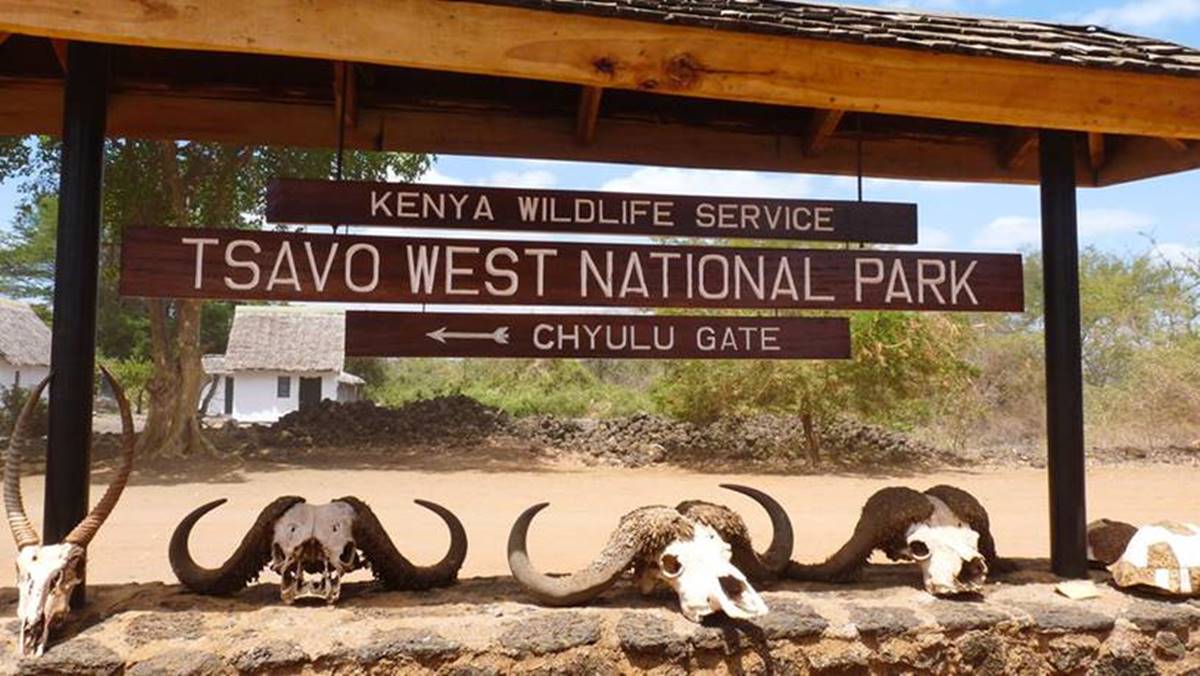
The northern part of Tsavo West is fascinating geologically: the whole developed area is dotted with old and new volcanic hills, ranging from pimples to great pyramids on the plain. The district was ravaged as recently as 200 to 300 years ago by a series of violent volcanic eruptions that devastated the area, and evidently killed much of the human population – local people still speak of ghosts and noises at night. West of Chyulu Gate, en route to Amboseli National Park, the road passes for several kilometres across a huge expanse of black lava rock, still barely colonised by plant life. And north of this area, a dramatic route climbs into the Chyulu Hills, out of Tsavo West National Park altogether and into the neighbouring Chyulu Hills National Park.
Tsavo West landmarks
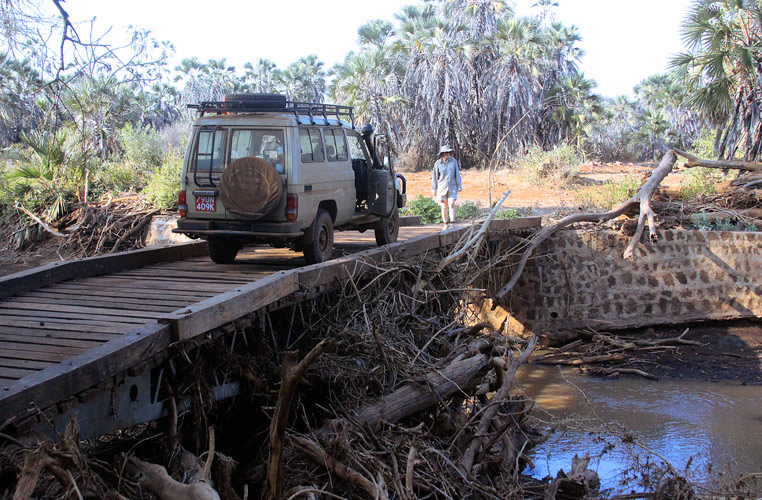
The most iconic attraction in the park is Mzima Springs. The crystal-clear water of this chain of lakes is filtered through the volcanic rocks of the Chyulu Hills just to the north. Shaded by majestic fig and acacia trees, the lakes swarm with fish, large crocodiles and some big pods of hippos. You can leave your vehicle and follow a pretty nature trail – though you need to keep an eye out for large animals, especially early in the morning or before dusk. If you’re lucky, the underwater viewing chamber, accessed by a pier, can provide unique photo opportunities – of a sinuous, gliding crocodile, or the delicate, tiptoe, swimming-walking style of a hippo. The Shetani Lava Flow is the largest of a whole series of lava flows in the park, with several places where you can get out of your vehicle and stretch your legs, including a series of lava caves below the surface. These caves used to be notorious for trapping prey animals that had stumbled inside in search of water, and then trapping predators that had followed them. At one time there was even a series of plaques identifying the bones on the cave floor. Over the last couple of decades the presence of visitors has gradually put off the wildlife from entering but the caves, and the all the lava flows still have a slightly spooky atmosphere – the Shetani Lava Flow is named after the Swahili for devil or malevolent ghost. The developed area of Tsavo West also has several steep, recent volcanic cones, one of which, Chaimu Crater, is a nature trail where, again, you can leave your safari vehicle and hike – though it’s best to do this early in the morning if you want to do the 30-minute hike to the summit as the heat on the cinder track becomes brutal as the sun rises. When you get to the top, you have superb 360-degree views of the Developed Area. Another spot for a good scan with the binoculars is the wooded Poacher’s Lookout, which you drive up on a steep, winding track. You can often seen lesser kudu in this area. Further east, the much bigger Rhodesian Hill, Kichwa Tembo and Ngulia have some dramatic steep slopes and cliffs, but there are no easy ways to get to the top of them, without organising a special bush hike accompanied by KWS rangers well in advance.Marking the southern boundary of the Developed Area is the Tsavo River. This is strongly seasonal river, whose flow is very much determined by rain and snowfall on Kilimanjaro and its eastern foothills. The sandy roads along the riverside are a good area for game drives, especially in the dry season. After heavy rain, however, the only bridge over the Tsavo, at road junction number 39, is prone to being damaged or washed away. When the Tsavo bridge is down, the whole of the rest of the park, south of the Developed Area, is inaccessible from the northern side. When you can get across, however, there’s a highly recommended long game drive to the southwest panhandle region of the park, through beautiful verdant woodland, following the east bank of the Tsavo River to its tributary, the Sainte Stream, in the Kilimanjaro foothills.
The wildlife of Tsavo West National Park
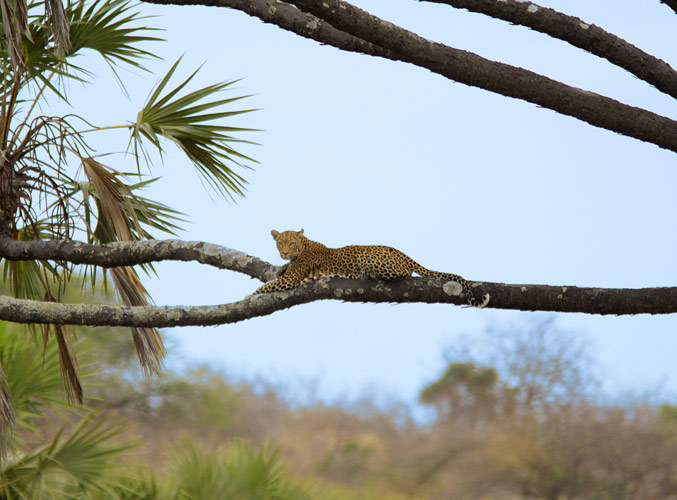
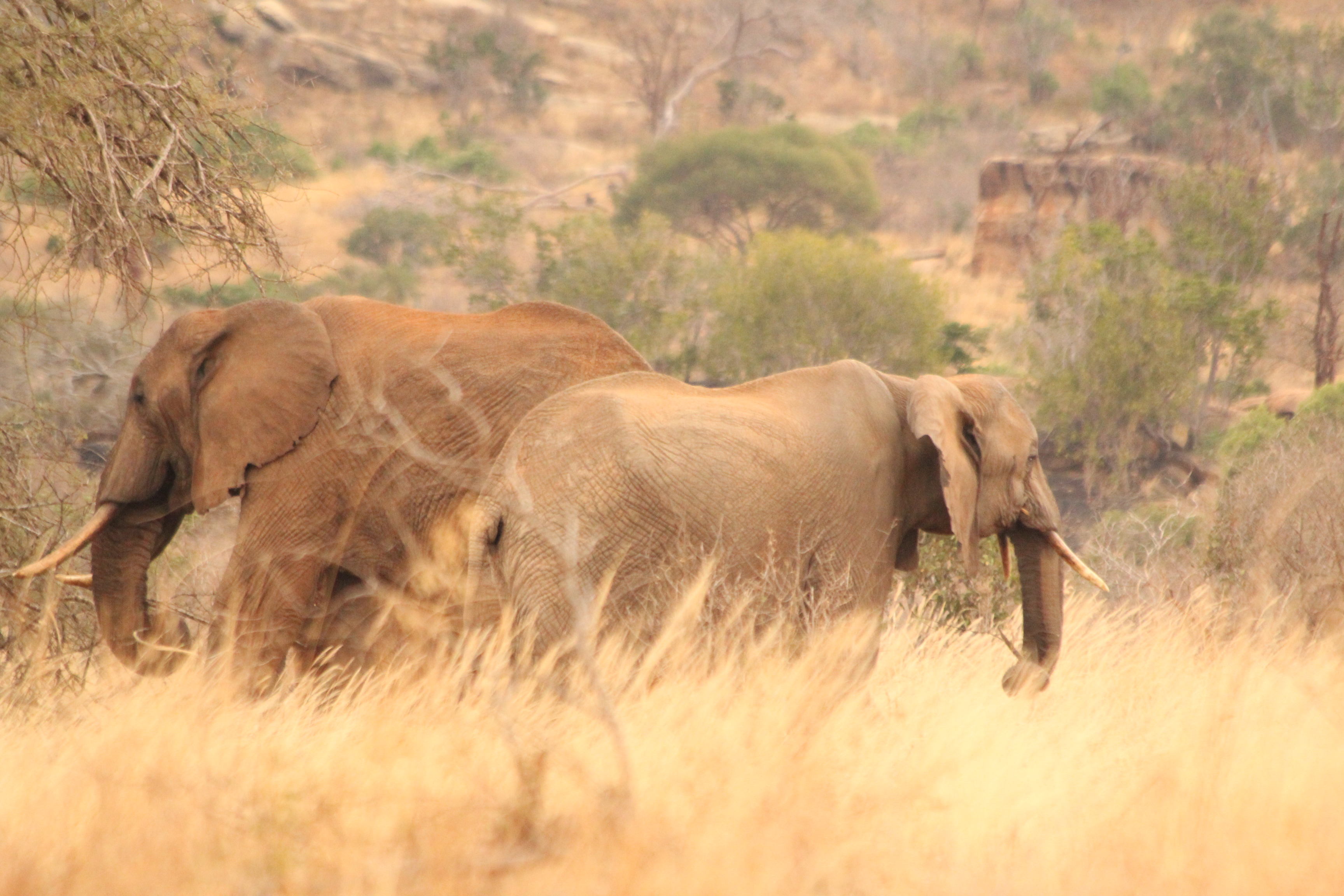
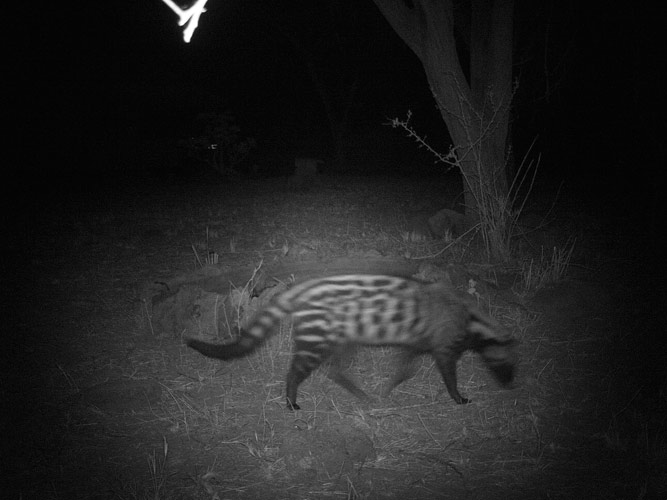
The hilly landscapes and woodland of Tsavo West mean that spotting wildlife can sometimes be tricky. There’s plenty of it, however, including large numbers of elephants and good lion prides. There’s also a good chance of seeing black rhinos in the secure rhino sanctuary. The experience of being on safari in Tsavo West is very different from a safari in Tsavo East or a Maasai Mara safari, where you often have views across wide-open country. Tsavo West safaris are more about unexpected sights as you turn a bend on a wooded track. Giraffe, impala, buffalo and Burchell’s zebra are all common species here. The birdlife in the park is outstanding – if you’re on a birdwatching safari you’ll be knocked out by the number of sightings you have. The white-headed buffalo weaver is a particularly noticeable species, with its prominent bright red rump, and there are at least eight recorded hornbill species here. If you have time for an all-day game drive to the southwest corner of the park, you could visit Lake Jipe, which is a real waterbird paradise.
History of Tsavo West
Until the time of the railway, the Tsavo West region had been inhabited for thousands of years by hunter-gatherers, with limited numbers of Kamba people moving through the region in the last thousand years or so, herding their livestock or looking for honey. Maasai cattle herders arrived in the eighteenth century from the Rift Valley further north, but the tsetse flies of the woodland that infected their herds with sleeping sickness put them off from spending long here: despite Tsavo West’s good water, the drier plains of Tsavo East were a safer grazing area. The Tsavo West region became a national park in 1948 and safaris in Tsavo West became popular in the late 1960s when the first charter flights began arriving in Mombasa, and really took off when the Mombasa-Nairobi Road was first surfaced in 1969.
Our Gallery
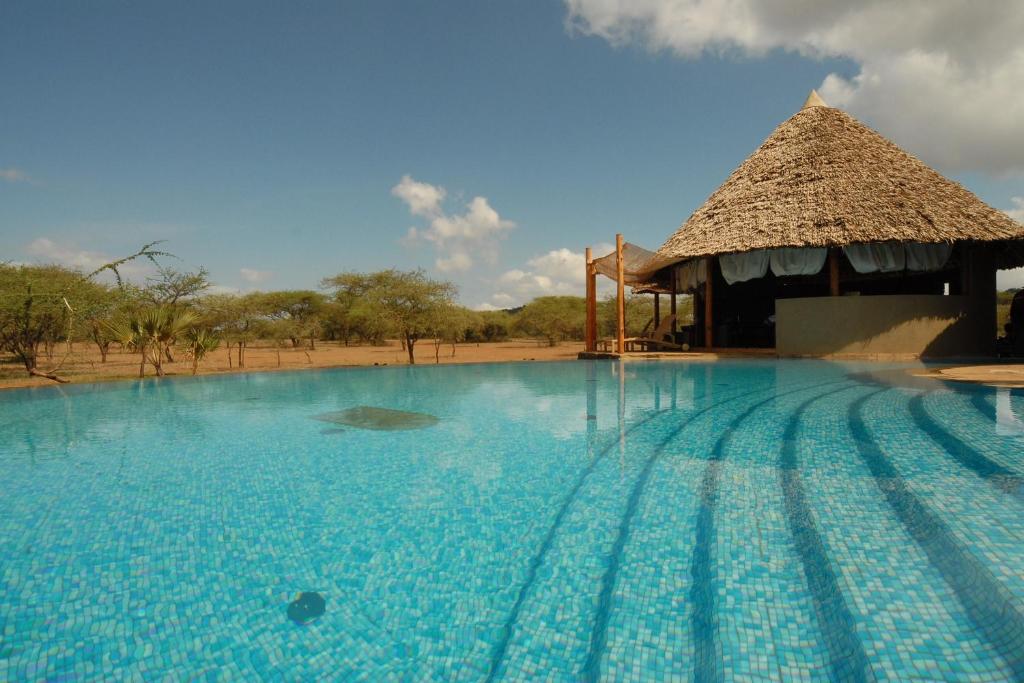
Swimming-pool
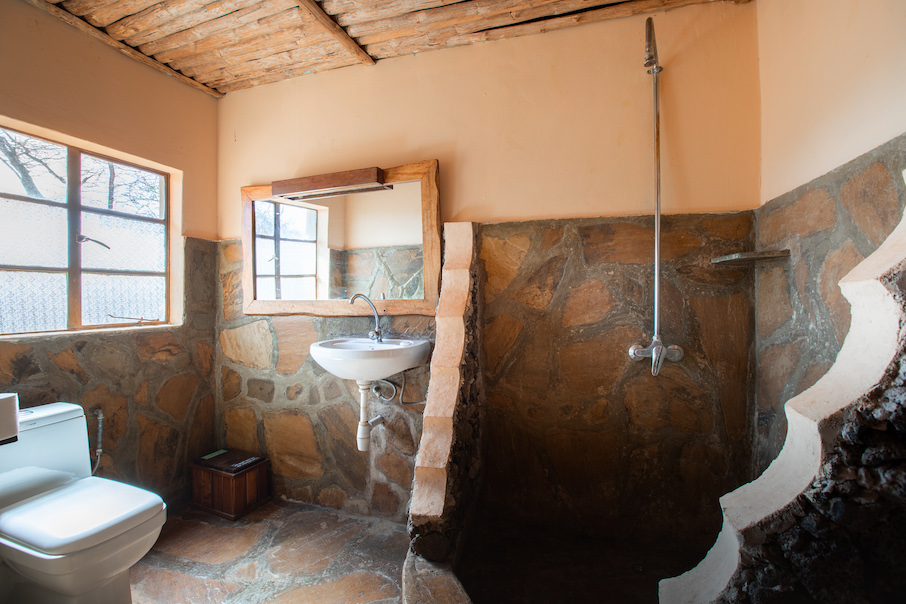
WashRoom
Our Guests
Bill board
The Beauty Of Nature
The taste of the wild
Bill board
The Beauty Of Nature
The taste of the wild
Bill board
The Beauty Of Nature
The taste of the wild
Bill board
The Beauty Of Nature
The taste of the wild
Bill board
The Beauty Of Nature
The taste of the wild